Comoros

Comoros

Diving in Comoros

20 sites82 species26–30 °C15–40 m vis

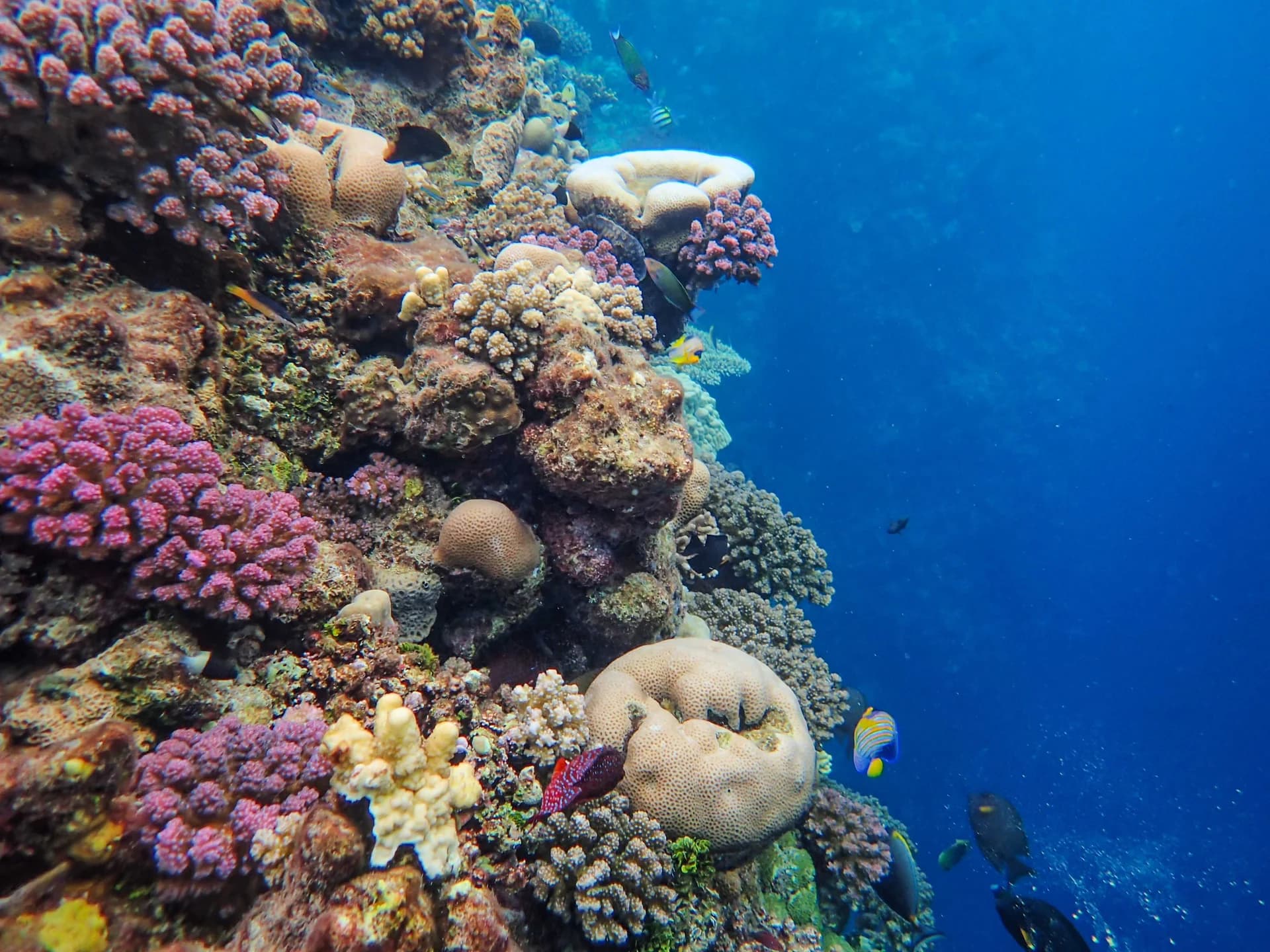
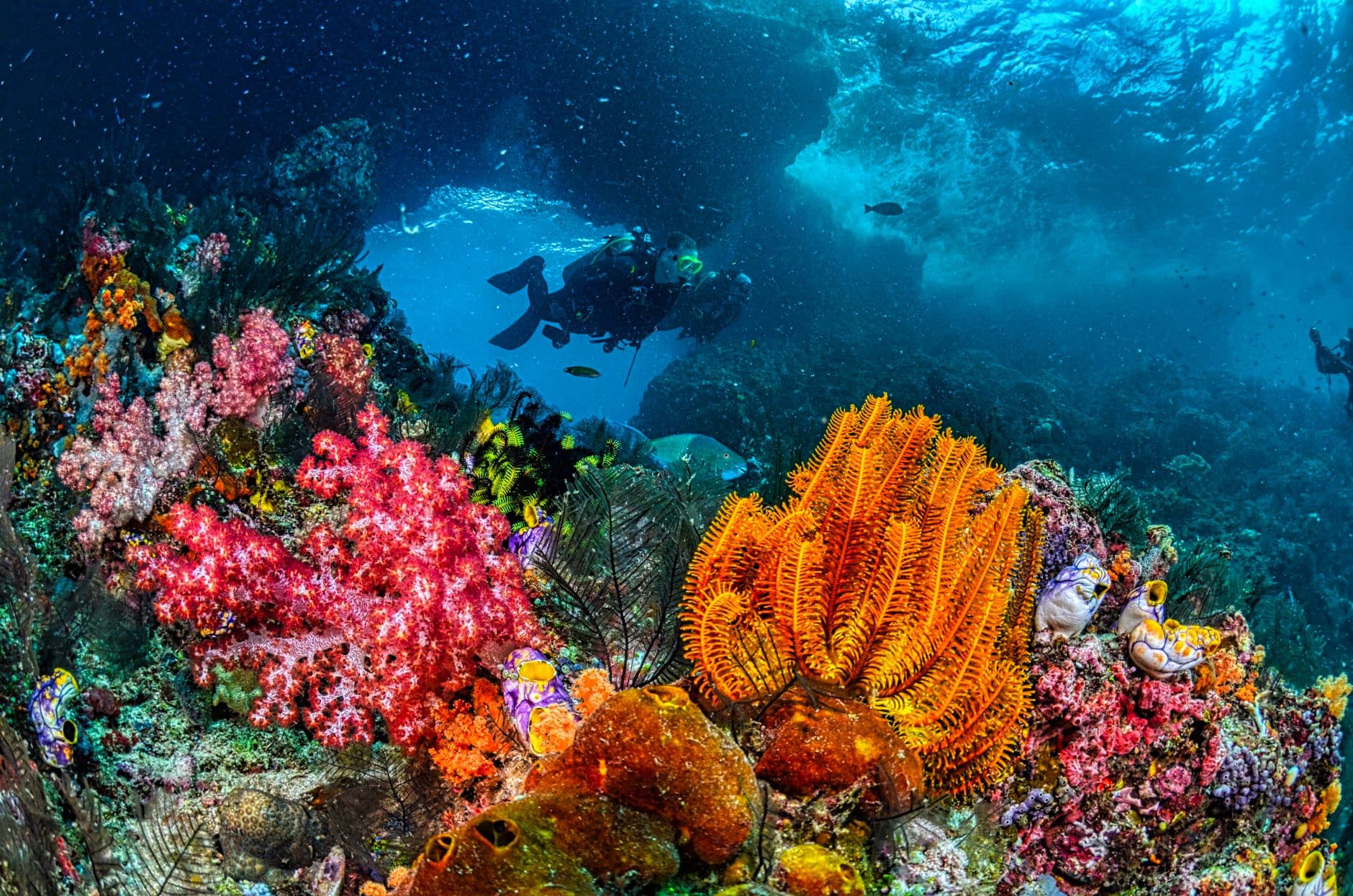
Photo: Francesco Ungaro / Pexels

The Comoros are the Indian Ocean's last diving frontier — a volcanic archipelago where coelacanths still swim in deep caves, whale sharks gather in near-privacy, and marine biologists discover new species on almost every dive. Two small dive operators serve an entire nation whose reefs have barely been explored. This is expedition diving at its rawest: 20,000 green turtles nesting on a single beach, a 300-million-year-old living fossil in your logbook, and reef walls that have never seen a crowd.

The Comoros are the world capital of the coelacanth — a 'living fossil' fish unchanged for over 300 million years. Comorian fishermen have known about them for generations, calling them 'gombessa.'Mount Karthala on Grande Comore has one of the world's largest active volcanic craters at 4 km wide, and its 1977 lava flow created a unique underwater dive site at Singani.Itsamia on Mohéli hosts the second largest green turtle nesting population in the Indian Ocean — up to 20,000 nests per year, with 100–150 turtles emerging per night on peak nights.The Mohéli Marine Park (est. 2001) was the Comoros' first protected area and is community-managed. The IUCN praised it in 2022 as a 'shining example' of community-based marine conservation.The Comoros produce 80% of the world's ylang-ylang essence — the iconic floral scent used in Chanel No. 5. The perfume islands' vanilla, clove, and cinnamon plantations fill the air as you dive.With only 2 verified dive operators for the entire country, the Comoros have the thinnest dive infrastructure of any destination in the DivePass pipeline. You will often be the only diver on the reef.

Explore the map

Select a pin to learn more. Use the zoom buttons or pinch to zoom.

Loading map…

Places on this map (7)
  • Enriched
  • Enriched
  • Enriched
  • Enriched
  • Enriched

15 places have no verified map location yet. Browse the page lists for more places.

Conditions

Water temp

26–30 °C

Visibility

15–40 m

Depth

5–55 m

Current

Mild

Best season

July–November (peak visibility 25–40 m, humpback whales Aug–Oct, manta rays Jun–Jul)

MonthSummary
JanWarm waters at 29°C with whale sharks feeding on plankton blooms. Turtle nesting in full swing and moderate visibility at 15–25 m. Rainy season with potential choppy seas.
FebSimilar to January with 29°C water, peak whale shark season, and turtle nesting continuing. Visibility remains moderate at 15–25 m. Cyclone season means flexible planning is essential.
MarEnd of the main turtle nesting peak with whale sharks still present. Water temperature holds at 29°C and visibility 15–25 m. Transition period as the rainy season begins to ease.
AprTransition month into dry season with whale sharks at peak and improving visibility at 20–30 m. Water temperature 28°C. A shoulder month offering the best of both seasons.
MayStart of the dry season with excellent visibility at 20–35 m and comfortable 28°C water. Manta rays begin appearing as conditions calm. One of the best months for overall diving conditions.
JunPeak manta ray season with 27°C water and visibility improving to 20–35 m. Calm seas, low humidity, and increasingly active marine life across all islands.
JulThe start of peak diving season — 26°C water, 25–40 m visibility, humpback whales arriving, and mantas still active. The best month for combining whale watching with pristine diving conditions.
AugPeak humpback whale calving season with the best visibility of the year at 25–40 m. 26°C water, manta rays, and reef sharks active. The absolute prime month for Comoros diving.
SepHumpback whales at peak, visibility still excellent at 25–40 m, and 26°C water. Reef sharks frequently sighted as the dry season draws to a close. The last month of guaranteed superb conditions.
OctHumpback whales begin departing as whale sharks return for plankton blooms. Water warming to 28°C with good visibility at 20–35 m. A transitional month with diverse marine life.
NovWhale sharks return in force with 27°C water and visibility at 20–30 m. The rainy season begins but conditions often remain diveable. Shoulder month with fewer tourists and active marine life.
DecWhale sharks abundant as turtle nesting begins anew. 28°C water with 15–25 m visibility. The start of the rainy/cyclone season — flexible itineraries recommended but rewarding diving for those who time it right.

Dive Sites (20)

Banc Vailheu (Vailheu Bank)

20–55m · Advanced

Pelagics · Sharks

Deep reef

Bimbini National Park Zone

5–30m · Intermediate

Coral reef · Seagrass

National park

Bird Island Mchaco (Île aux Oiseaux)

10–40m · Advanced

Strong currents · Pelagics · Sharks

Chindini

10–30m · Intermediate

Reef · Turtles

Volcanic boulders

Coelacanth Habitat (Deep Sites)

100–300m · Expert

Deep diving · technical · coelacanth

Épave du Massiwa (Massiwa Wreck)

20–40m · Advanced

Wreck · Macro life · Artificial reef

Galawa Beach Reef (Épave Galawa)

10–30m · Intermediate

Wreck · Reef · Seagrass

Itsamia Turtle Sanctuary Reefs

5–20m · Beginner

Turtles · Reef

conservation

+12more sites in the appGet the app →

Regional species catalogue (82)

Species recorded in this destination's wider regional catalogue. A species being listed here does not mean it is seen at this destination — check the note on each card.

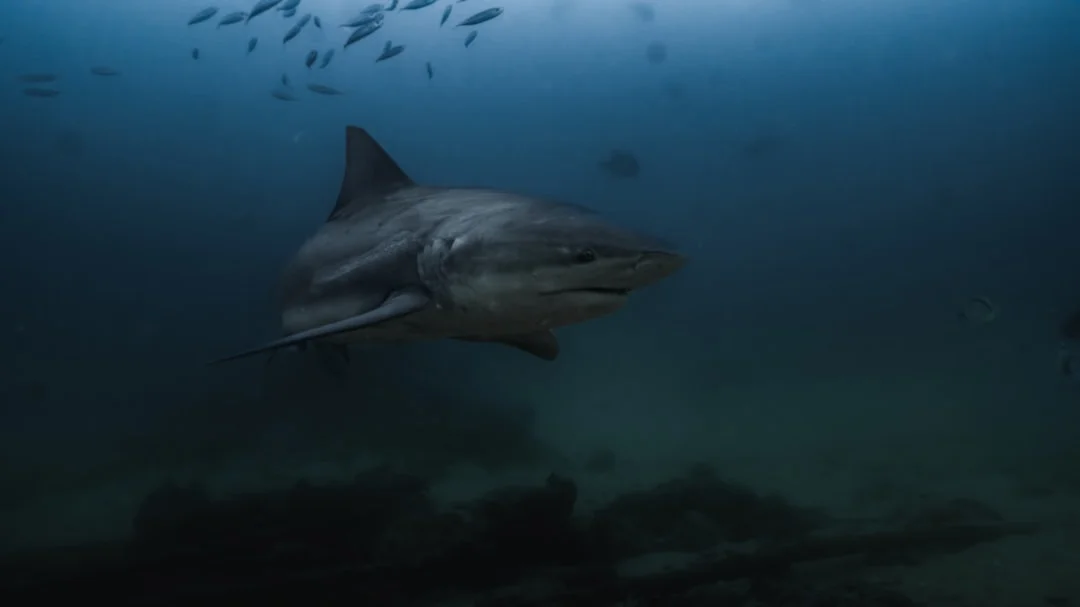
Bull Shark

Bull Shark

General species description, not specific to this destination

Bull sharks are one of the most impressive predators divers can encounter in warm coastal waters. These robust sharks are easily recognized by their broad, blunt snout, stocky build, and grey coloration with a white underside. Growing up to 11 feet long, they have a powerful, muscular appearance that commands respect underwater. Bull sharks are known for their curious nature and may approach divers, maintaining a confident but generally non-aggressive demeanor. They're often seen cruising along reef walls or in open water, sometimes in small groups. Their ability to tolerate both saltwater and freshwater makes them unique among sharks, and they're excellent hunters with a varied diet including fish, rays, and other marine life.

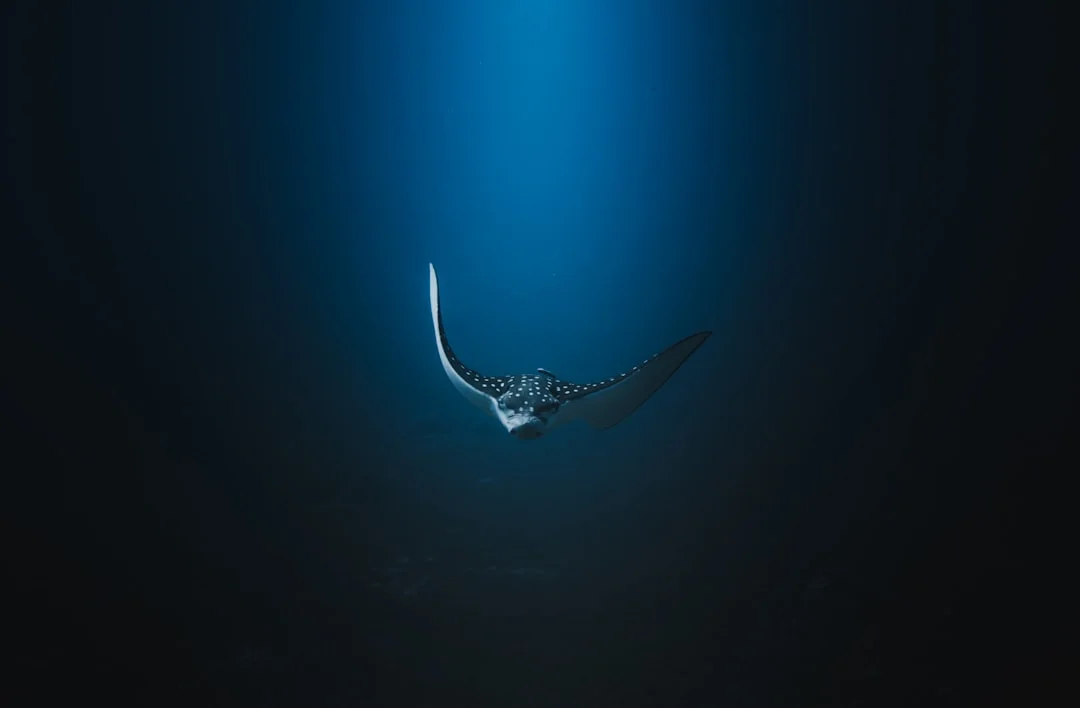
Spotted Eagle Ray

Spotted Eagle Ray

General species description, not specific to this destination

The spotted eagle ray is one of the most spectacular encounters in tropical waters worldwide. These graceful giants glide effortlessly through the water with their distinctive diamond-shaped bodies and long, whip-like tails. Their dark backs are adorned with white spots or rings, creating a beautiful pattern unique to each individual. Watch for their prominent head with a duck-like snout and large eyes positioned on top. They're often seen cruising near sandy bottoms or coral walls, occasionally stopping to dig in the sand for mollusks and crustaceans. Their fluid, bird-like swimming motion is mesmerizing as they 'fly' through the water column, sometimes in small groups.

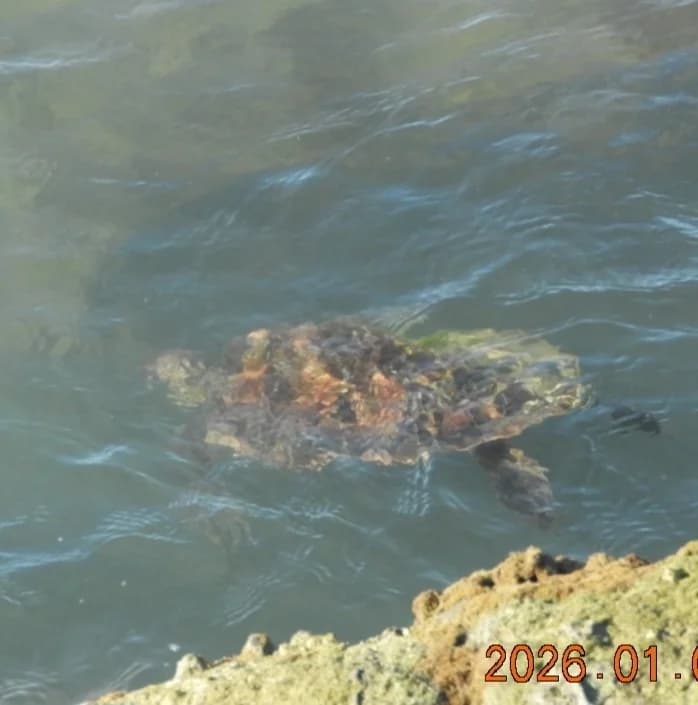
Green Sea Turtle

Green Sea Turtle

Destination note

Abundant year-round in Mohéli Marine Park. Itsamia sanctuary sees 20,000 nests annually. Frequently sighted on every Mohéli reef dive.

Hawksbill Turtle

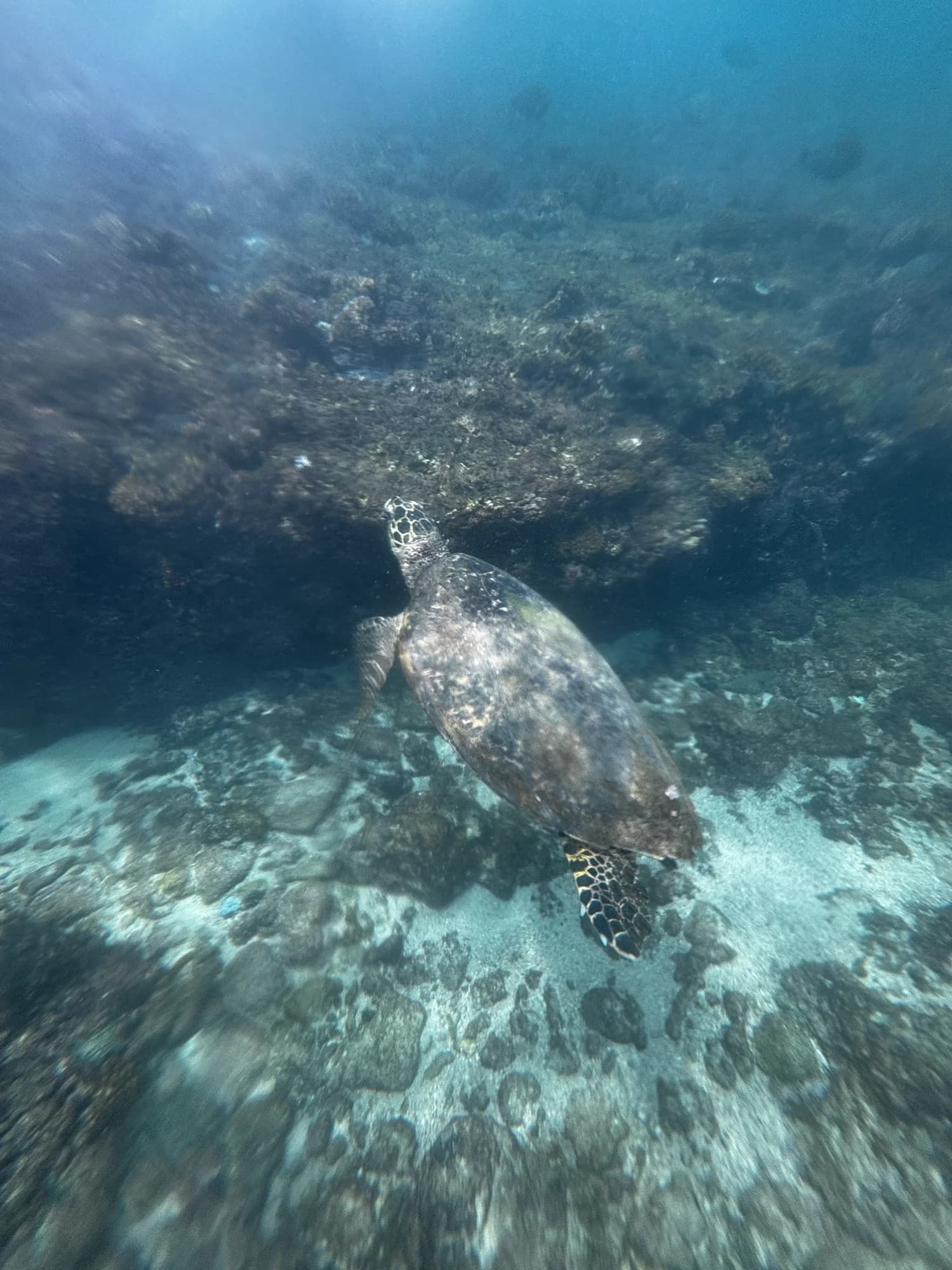
Hawksbill Turtle

Destination note

Commonly sighted on reefs throughout all three islands, particularly at Magic Rocks (Mohéli) and Trou du Prophète (Grande Comore).

Atlantic Bottlenose Dolphin

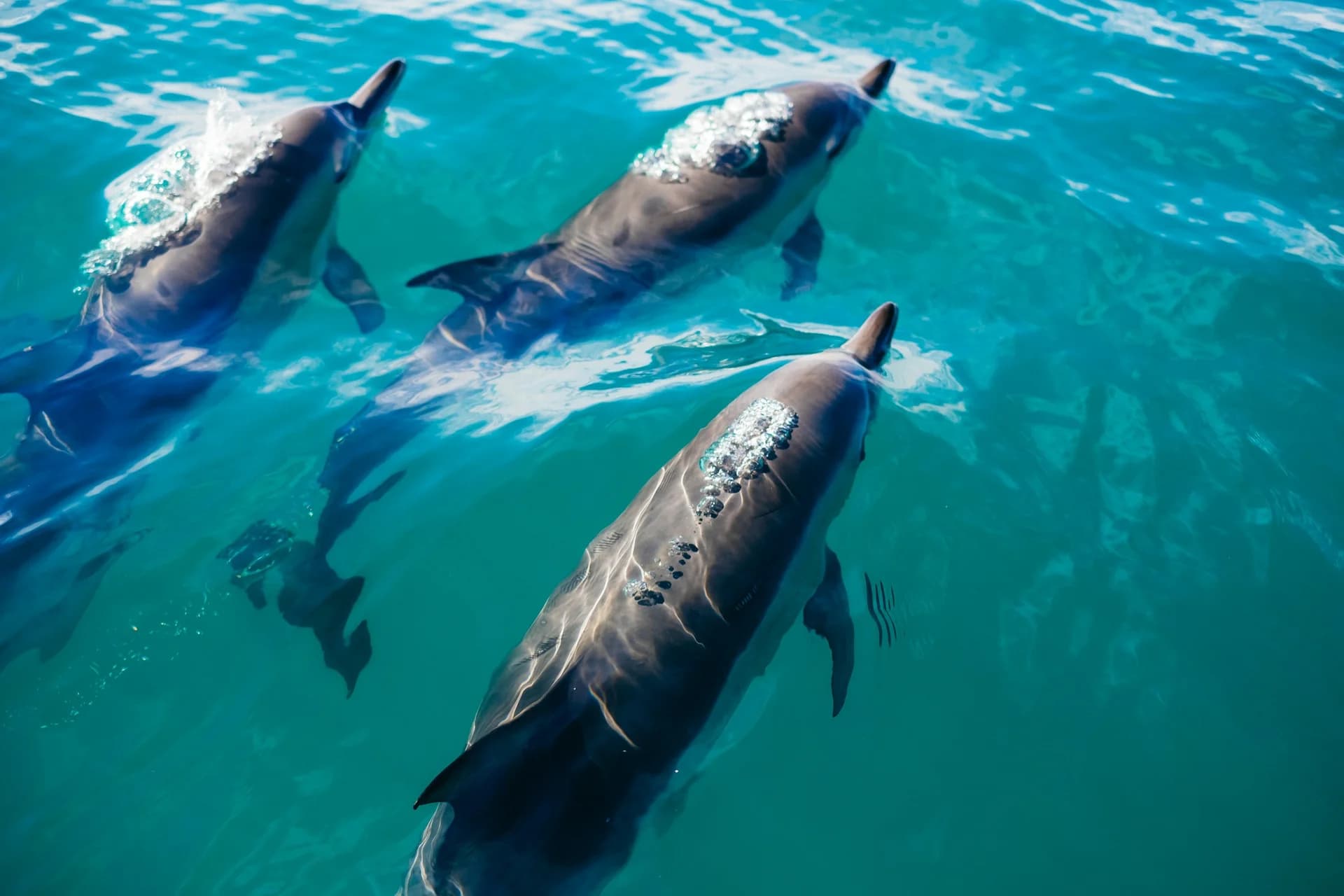
Atlantic Bottlenose Dolphin

Destination note

Year-round resident with pods regularly sighted in the Mozambique Channel around all three islands. Most commonly encountered during boat crossings to offshore sites, especially between May-November when seas are calmest.

Common Lionfish

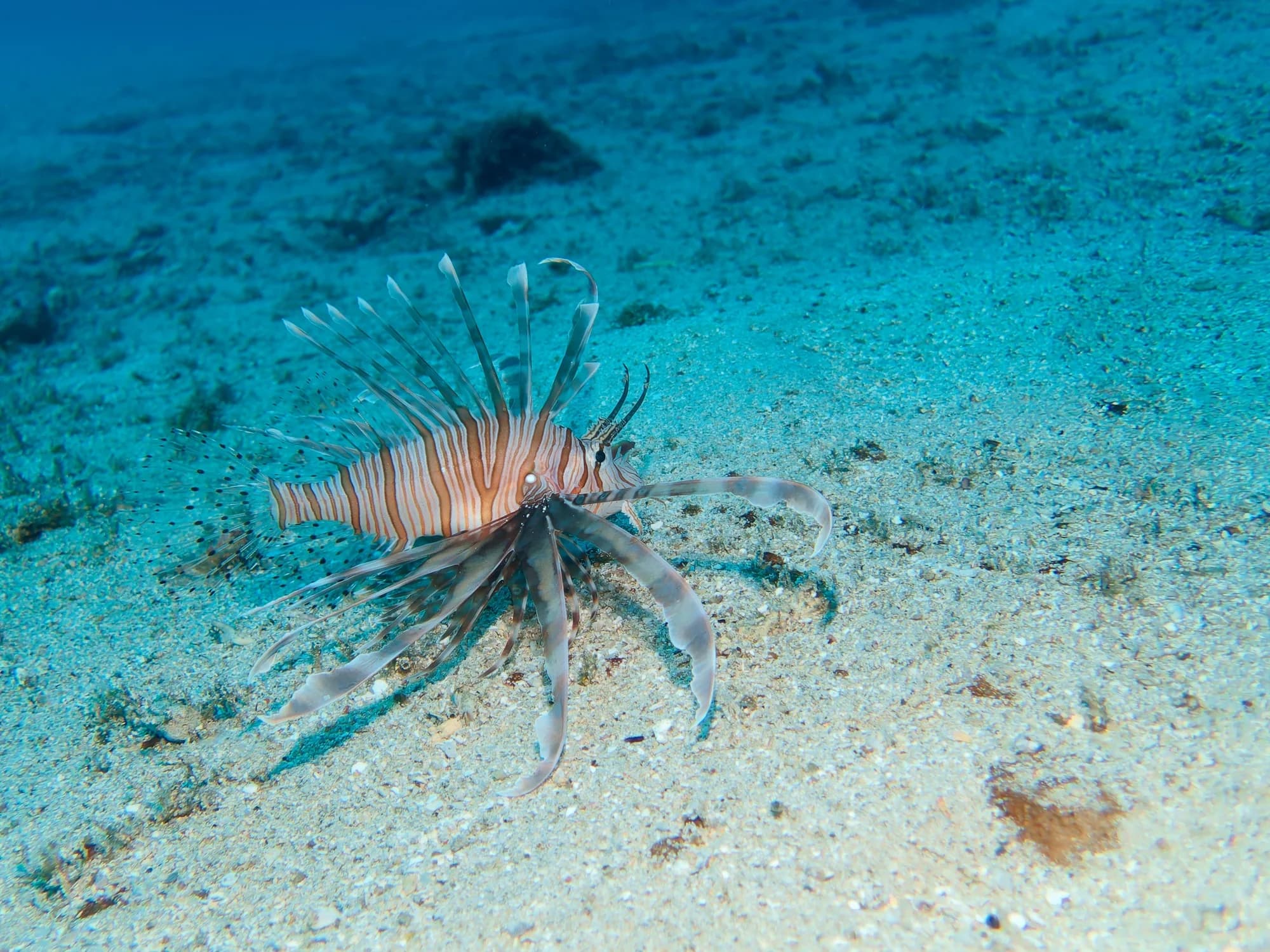
Common Lionfish

Destination note

Commonly seen on most reef and wreck dives across all three islands. Particularly abundant at the Massiwa wreck (Grande Comore) and Singani lava flow formations.

Great Barracuda

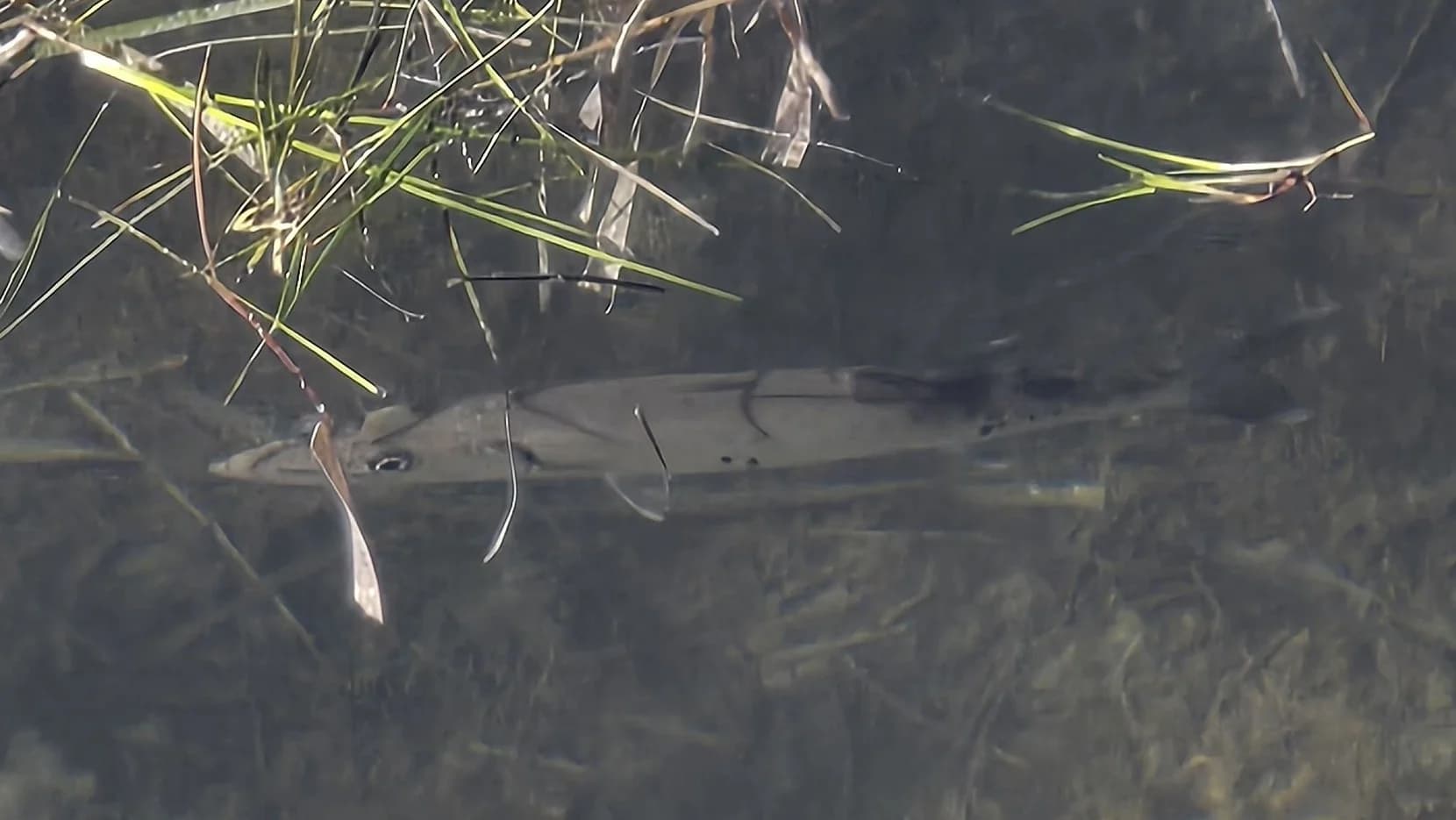
Great Barracuda

Destination note

Common at outer reef sites and deeper pinnacles. Most frequently encountered at Vailheu Bank, Bird Island Mchaco, and the Massiwa wreck. Especially active during calmer conditions May-November.

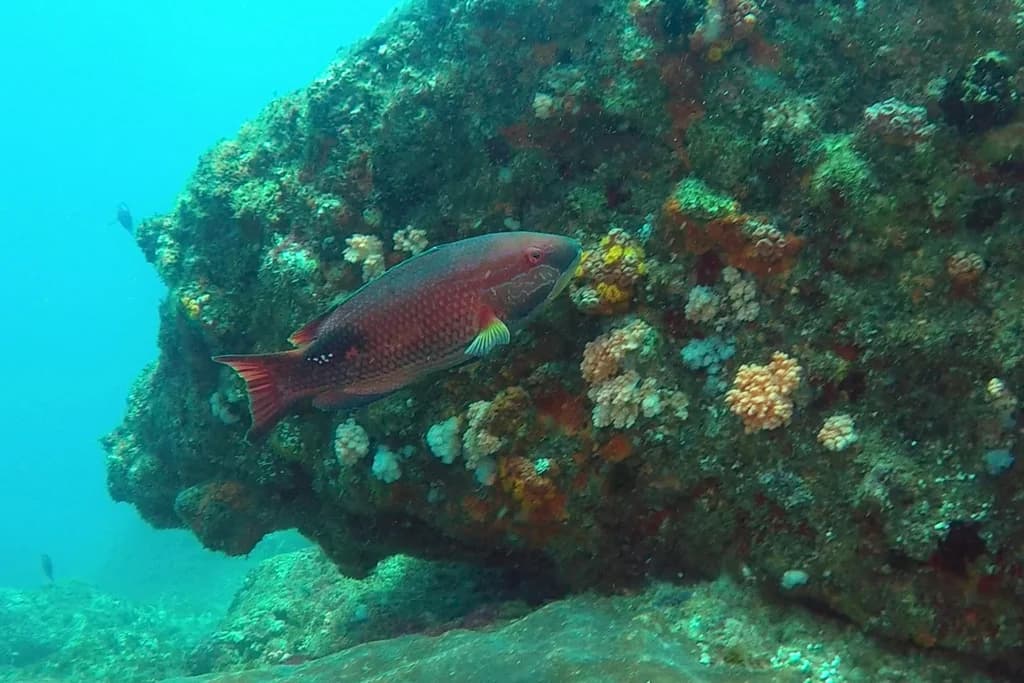
Saddleback Hogfish

Saddleback Hogfish

General species description, not specific to this destination

A large hogfish or wrasse with a strong body, prominent lips, and a saddle-like dark marking that can vary by life stage. Adults patrol reef slopes and drop-offs, feeding on benthic invertebrates exposed by probing or turning rubble. The species is often inquisitive but keeps a comfortable distance from divers.

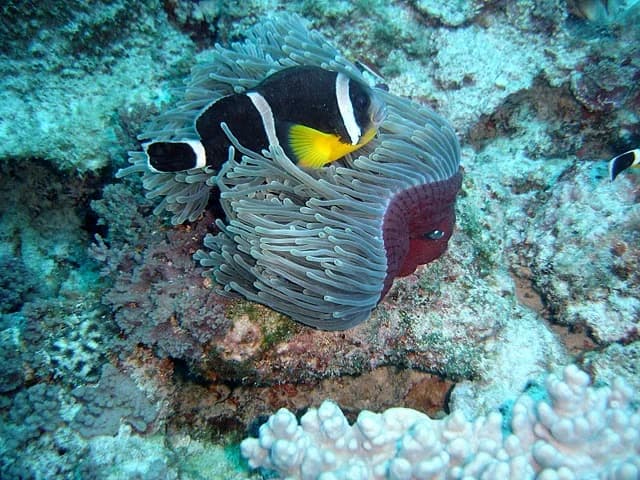
Mauritian Anemonefish

Mauritian Anemonefish

General species description, not specific to this destination

A small anemonefish with a bright yellow-orange body and a distinctive black vertical bar behind the eye. Smaller than the more common clownfish, reaching about 8cm maximum. Forms symbiotic relationships with specific sea anemone hosts. The species is less widely distributed than other clownfish, primarily found in the Red Sea and Gulf of Aden region. Its bright coloration makes it a favorite among macro photographers.

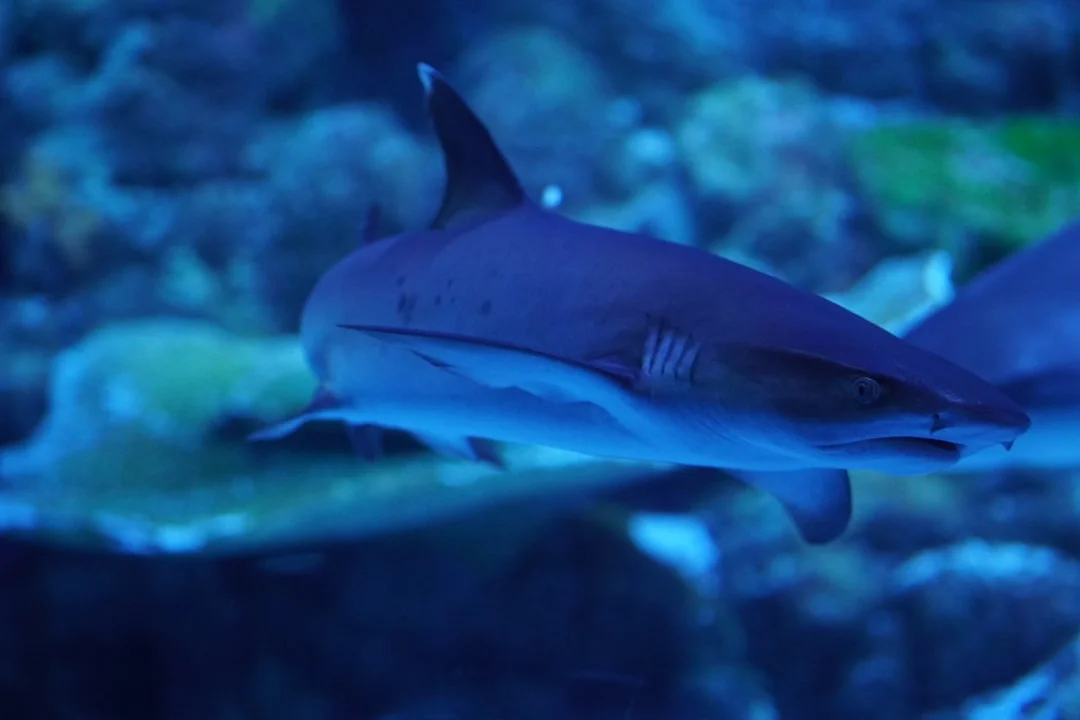
Whitetip Reef Shark

Whitetip Reef Shark

General species description, not specific to this destination

A slim reef shark with white-tipped dorsal and tail fins, often seen resting motionless in caves and under ledges by day. Unlike most sharks it can pump water over its gills while stationary.

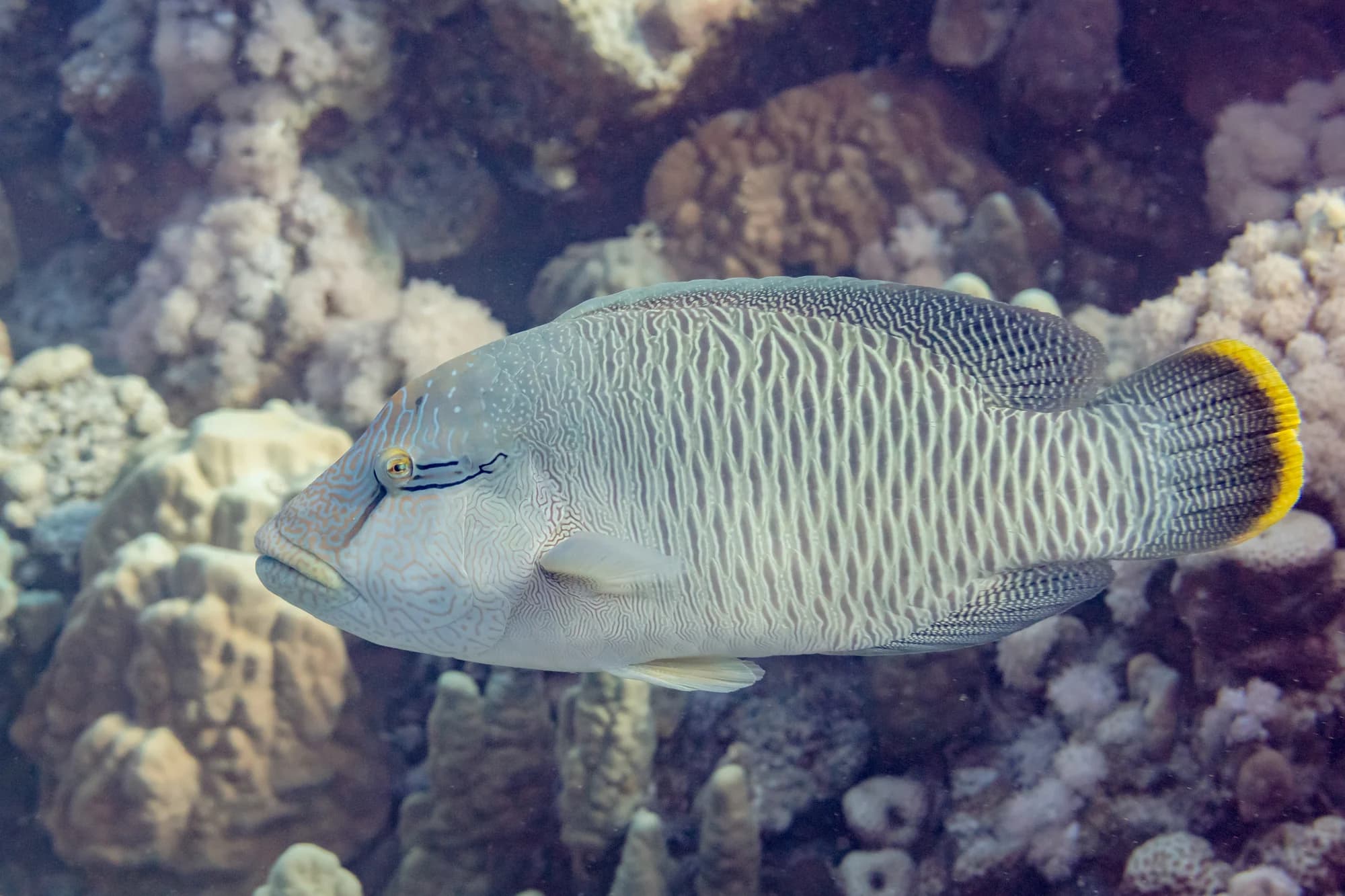
humphead wrasse

humphead wrasse

General species description, not specific to this destination

The Humphead Wrasse is an iconic and majestic inhabitant of Indo-Pacific coral reefs, instantly recognizable by its immense size and the prominent, bulbous hump on its forehead, especially pronounced in older males. These gentle giants can reach over two meters in length and are typically greenish-brown to blue-green, often displaying intricate patterns on their scales. Divers will notice their thick, fleshy lips and two distinct black lines radiating behind the eye. They move with a slow, deliberate grace, often cruising along reef slopes and outer drop-offs. While generally solitary, they can sometimes be seen in small groups, curiously observing divers. Encountering a Humphead Wrasse is a truly unforgettable experience, a testament to the health and grandeur of the reef ecosystem.

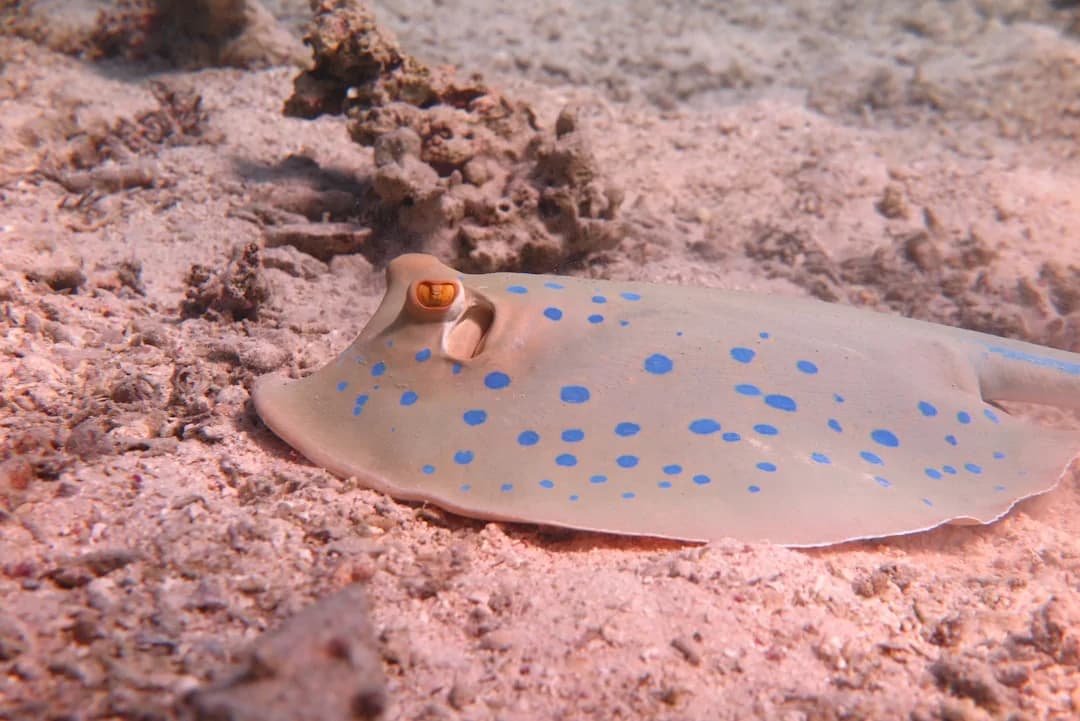
Bluespotted Ribbontail Ray

Bluespotted Ribbontail Ray

General species description, not specific to this destination

A small, brightly patterned stingray with electric-blue spots, often resting under coral ledges or foraging over sand on Red Sea reefs.

+70more species in the app

Dive Shops (2)

Massiwa Diving Center

★ 4.7Moderate

Laka Lodge Diving/training & certification

★ 4.2Moderate
Website ↗

Guides

Safety

Police

Universal Emergency (Police / Medical)

17

Emergency

Fire Brigade

18

Hospital

El-Maarouf Hospital (Moroni)

+269 773 90 13

Emergency

DAN 24/7 Emergency Hotline (nearest recompression: Réunion ~1,400 km)

+1-919-684-9111

Emergency

Medical Air Evacuation (DAN — nearest recompression Réunion ~1,400 km)

+1-919-684-9111

Hyperbaric chamber

No verified recompression chamber on record.

Contact DAN: +27 82 810 6010

Bring Comoros underwater

Offline access, dive log, AI fish ID, live site maps, and trip planning.

Download on the App Store